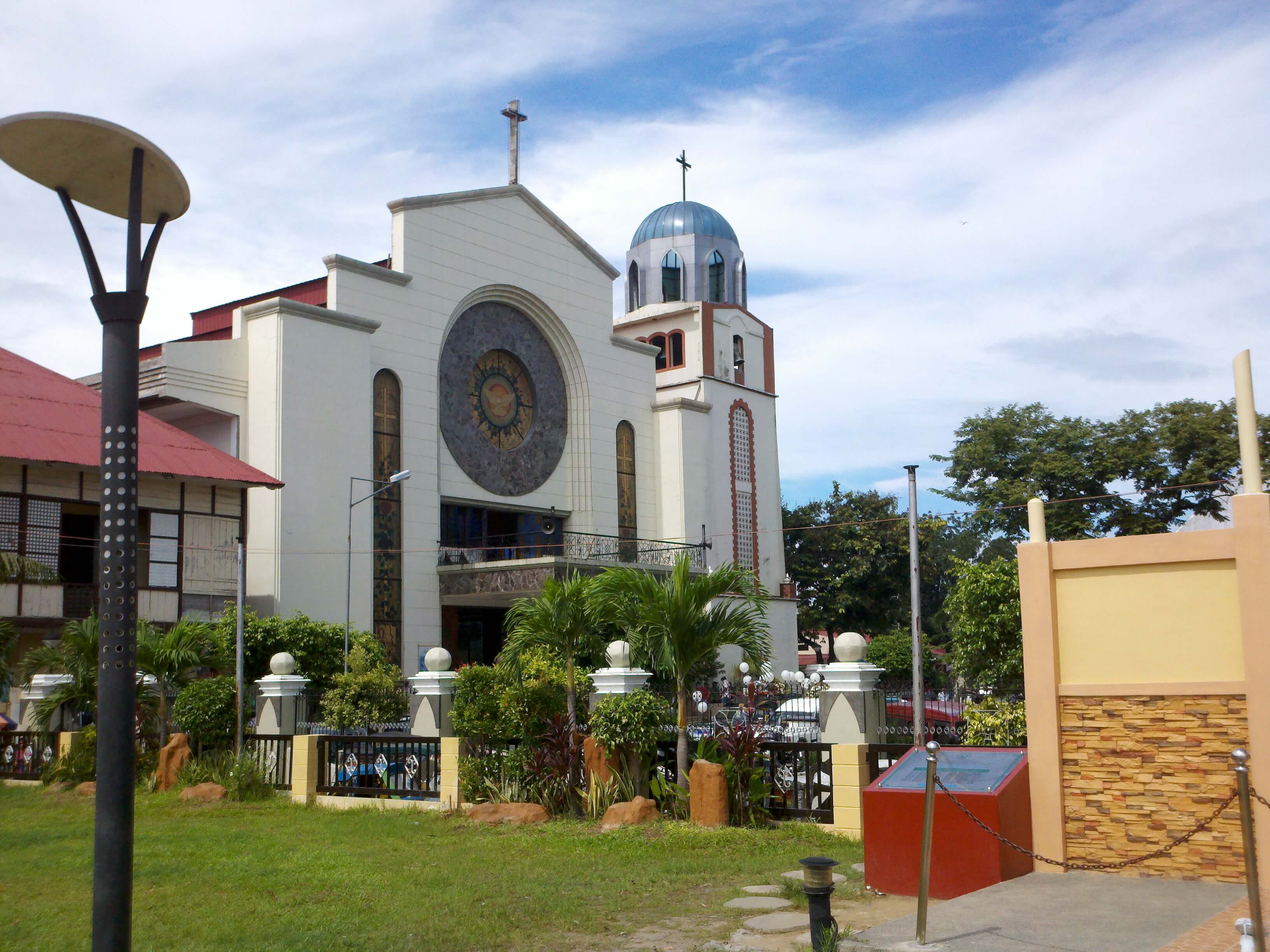
Malasiqui : How the town evolved its name 

     There was no confirmed etymology on how the town got its name. The Dominican Friar writer,Suarez, points out that "lasi", meaning lightning in the Pangasinan dialect used to occur in the various places of the town. Hence, "MA", signifying plurality in the dialect, was affixed to the root word, "KAYO", meaning "YOU" in the plural form. Literally, MALASIQUI (KAYO) means " You have too much lightning".

     There was also the tale, most often taught of in the grade schools of the town that due to the presence of a filthy creek, popularity called "Binalbalolong" (this can still be found but already dried up partly covered by waterlilies at the back of the Municipal Building), some Spanish fundadores found the place to be "MALA" meaning BAD. Others agreed so they concurred, "SI" meaning YES but one of them did’nt quiet get what its all about, so he asked "QUE"?. From thereon, the native coined the three words that they had heard. Eventually, it turned out to be "MALASIQUI".

Creation as a Municipality

     In the monumental work of the historian Rosario Mendoza - Cortes for the history of Pangasinan, (circa 1572 to 1800) she accounted for the founding of Malasiqui to the following:

      Local historical records attribute the founding of Malasiqui in 1671 to the efforts of two native chieftains namely Don Domingo Manguisesel and Don Diego Catungal, and a Dominican priest Fr.Juan Camacho. The two native chiefs made several trips to Lingayen, the capital of the province, and to manila, to obtain the approval for the founding of the town. Between 1671 and 1691, the following were recorded to have participated in laying the foundations of the new town and heading its government: Don Goa Gonzales, Don Jacinto Mabanglo, Don Raymundo Cayago, and Don Dionisio Rosario. It is noteworthy that up to 1740, the heads of the town were not called by the usual title of Capitan but were designated fundadores or founders of the town.

      Before its founding, the place (Malasiqui) was popularly used as “rancherias” or ranches for cattle grazing. The natives (of Malasiqui) at that time were too far from the nearest places of worship (Bayambang then known as Malunguey and San Carlos then called Binalatongan) and they did not want to be separated from their cattle for long for fear od losing them to cattle rustlers.

      Dominican records confirm the role played by Fr. Juan Camacho in the founding of Malasiqui.He was alternately assigned, between 1652 and 1667, to the towns of Calasiao, Balunguey (Bayambang),and Binalatongan (San Carlos) the towns that now border the present town of Malasiqui.

         As vicar of Binalatongan, his jurisdiction often included opportunity to further the work of Hizpanization in the areas he regularly traversed. Father Camacho’s efforts to build a new town out of the scattered tiny settlements have been described a follows:

        And thus knowing that in those wide plains near Malunguey and Binalatongan, there lived many habitants who lacked the doctrine and failed to hear mass, and other obligations because of the distance of their rancherias from the churches of the said towns and because he feared the loss of those souls and wished for their spiritual progress, he endeavoured to build a new town, on a site named Malasiqui which was in the middle of those rancherias, in order to collect and combine all these natives, and to administer mass for them and other.

       And so Fr. Juan Camacho labored hard to establish the Spanish "church and municipal hall" system of government in order to collect and combine all the natives into a new munici- pality which they called Malasiqui. He became minister for many years of this town increased in area, population and progress everyday. Today, it is one of the largest towns in the province of Pangasinan.

       During the Palaris Revolt that started on November 3, 1762, Malasiqui and nearby places were the first towns to follow the example set by San Carlos City whereby capitanes, cabezas and other town officials were deposed by rebels in protest of heavy taxation being imposed on the people.

       But after the Palaris Revolt (and the Malong Revolt staged one hundred years earlier) was quelled by the more superior Spanish forces, the people of Malasiqui lived a peaceful life subservient to the Spanish government. They did not join the battle against the American forces that conquered the country thereafter.

      Most of the local streets and roads were laid down during the American era including the other important infrastructures such as the school system, market place and water system.


     Endowed with a rich historical background since 1671, or exactly three hundred thirty five hundred years since its creation as a municipality,MALASIQUI has evolved into one of the fastest growing commercial venues for economic growth in Central Pangasinan in the 21th century.

     Malasiqui is envisioned to be to be a peaceful, progressive, self reliant, globally competitive and a premier agro-industrial city by the year 2014 through good governance, active people’s participation, social justice and God fearing citizenry.

     Ultimate mission is “IMPROVEMENT OF LIFE” for all citizens of Malasiqui.


     The municipality of Malasiqui is located at a distance of approximately 175 kilometers south of Manila and 35 kilometrers southeast of Lingayen, the capital town of Pangasinan. It lies in the very heart of Pangasinan, in the central plains of the province. It is bounded by the municipalities of Urdaneta City and Villasis to the east; Alcala, Bayambang and Basista to the south; San Carlos City to the west, and Calasiao and Sta Barbara to the north.

     It is one of the six local government units comprising the Third Congressional District of Pangasinan.

     The Municipality has a total land area of thirteen thousand one hundred thirty eight hectares (13,138 has.) and is composed of seventy-three (73) barangays that are inter-connected by road networks.

     It is linked to the rest of the province and Luzon by five major land routes: the Villasis - Malasiqui roadline; the Bayambang - (form Camiling) Malasiqui roadline; the Urdaneta City - Malasiqui roadline; the San Carlos City - Malasiqui roadline; and the Calasiao - Sta Barbara - Malasiqui roadline.

     The Municipality is characterized by flat land and range topography consisting of physio- graphic features as follows: plain on its north, west, south and central parts; rolling upland on the eastern part, and lowland on its south-eastern tip near the Agno river.

     From the total land area of thirteen thousand one hundred and thirty eight hectares (13,138 has.) More than 2,936.63 or 23% are considered as sloping to moderately rolling while 9,907.39 hectares or 76% are level and the rest are gently sloping undulating lands. There are marshy areas located at barangays Mabulitec, Apaya, Don Pedro and Warey. A large portion of 10,248 hectares or 78.01% of the total land area is classified as level to nearly level and gently sloping undulating devoted to agriculture particularly farming.

     Malasiqui is comprised of 73 barangays. Barangays are governed by the Local Government Code (RA 7160). Municipal and Barangay officials are elected by the people and served their constituents for a three-year tenure.

     Most Malasiquinians are predominantly Roman Catholic in faith with two major dialects spoken - Pangasinan and Ilocano. English and Pilipino languages are also spoken in the household, schools, government and business transactions.

     The latest actual count on population and household by barangay was conducted by the Rural Health Centers I and II in 2005. The total population surveyed was 125,633 and while the total household population was 22,208 distributed to 73 barangays. Poblacion is the most thickly populated barangay with a population of 10,377 while Barangay Viado was the least with a total population of 603.